The right binding depends on how thick your journal will get and whether you want to add or remove pages later. A single pamphlet stitch is the fastest and suits one thin signature. Sewing several signatures into one cover gives a fuller book. Elastic and ring bindings let you take pages in and out without sewing. The Coptic stitch takes longer but produces a book with an exposed spine that opens fully flat. Here is how each one works, and which to choose.
Tools for Every Method
A small kit covers all five bindings:
- Awl: a pointed tool for piercing sewing holes through folded paper. A thick needle pushed into a cork works for thin signatures.
- Bone folder: a smooth, flat tool for creasing folds sharply and scoring covers.
- Binder clips: to keep the pages aligned while you pierce and sew.
- Needles: a bookbinding or large-eye needle; a curved needle is helpful for Coptic stitch.
- Waxed thread: waxed linen or waxed polyester. The wax helps the thread grip itself, so knots and stitches hold tighter.
- A hole template: a strip of scrap paper the height of your signatures, folded in half and marked with the hole positions, so every signature is pierced in the same places.
Method 1: The Single Pamphlet Stitch
This is the simplest bound book: one signature sewn to a cover through the fold. A bookbinding handout from the Winchester School of Art gives the method in a few steps, which in summary are:
- Fold each sheet in half separately and crease it with a bone folder.
- Nest the sheets together with the cover outermost and clip the top and bottom.
- Pierce three holes along the fold: one in the middle and one about 15 mm from the head and the tail.
- Sew in through the center hole from the outside, out through one end hole, skip the center and go in through the other end hole, then come back out through the center.
- Make sure the two thread ends sit on opposite sides of the long stitch, pull them taut and tie a square knot over it.
The same handout suggests 4 to 10 sheets of text-weight paper (60 to 150 gsm) and a cover of 250 to 300 gsm. Junk journal pages gain bulk from glued pieces, so the lower end of that range is safer. For a longer spine, use five holes and repeat the in-and-out pattern from the center outward. Our guide to starting a junk journal walks through this stitch with first-page ideas.
Method 2: Several Signatures in One Cover
When one signature is not enough, sew several into a single cover. The simplest way is to treat each signature as its own pamphlet, sewn to the cover spine in a separate column of holes.
- Make a cover with a wider spine. Measure the thickness of your signatures when stacked loosely and add a little extra, since collage will make them thicker.
- Score lines on the cover spine, one for each signature, spaced evenly across the spine width.
- Pierce the same three or five holes along each scored line using your template.
- Sew each signature to its line with a pamphlet stitch, tying the knot inside the signature or outside on the spine.
Three signatures of four to six folded sheets each make a comfortable, chunky journal. Big kits with many page designs are useful here, since you can give each signature its own sub-theme:

Forest Fairies Big Junk Journal Kit
See the listing ↗
Alice in Wonderland Junk Journal Kit
See the listing ↗
Majestic Mermaid Junk Journal Kit
See the listing ↗From the collection Junk Journal Printables. New Creative Fabrica members get 10 free downloads, and any of these can be one of them.
Method 3: Elastic Binding
Elastic binding needs no sewing at all and lets you swap signatures in and out.
- Punch or pierce two holes through the cover spine for each signature, near the head and tail.
- Thread a length of round elastic cord through each pair of holes so it runs down the inside of the spine, and knot it on the outside.
- Open each signature at its center and hook it over one elastic, so the elastic sits in the fold.
This method works best with lighter signatures. Heavy, collage-filled pages can pull the elastic and slide. A small stitch or a clip through the fold can hold a signature in place if it wanders.
Method 4: Ring Binding
Ring binding turns the journal into something closer to a scrapbook album: single sheets rather than folded signatures.
- Punch two or three holes along the left edge of each page and the covers, using a template so they line up.
- Reinforce the holes on thin pages with paper hole reinforcement stickers or a strip of cardstock glued along the edge.
- Open loose-leaf rings (also called book rings), thread on the back cover, the pages and the front cover, and close the rings.
Rings are ideal for very bulky pages, fabric pages and journals you want to rearrange. The trade-off is that pages do not form spreads as neatly, since there is a gap at the rings.

Method 5: Coptic Stitch
The Coptic stitch is named after the Copts, the early Christians of Egypt, whose bookbinding it is based on. A paper published in the American Institute for Conservation's Book and Paper Group Annual describes The Morgan Library & Museum's collection of more than 50 Coptic volumes, most of them found at Hamouli, Egypt, in 1910 and bound in the 9th and 10th centuries. The authors note that many of the basic techniques developed in the earliest centuries of the codex continue in hand-bound art books today.
In the modern craft form, each signature is sewn to the next with a chain of linked stitches across an exposed spine, and the boards are sewn directly to the first and last signatures. There is no spine cover. The result opens fully flat, which is why it is popular for art journals.
The basic sequence:
- Make two separate covers from book board or chipboard, covered in paper.
- Pierce an even number of holes along each signature fold and a matching row of holes near the spine edge of each cover, using one template for all of them.
- Sew the first signature to the front cover, then add each following signature by sewing through its holes and looping around the stitch below to link it to the previous signature.
- Finish by sewing the last signature to the back cover and tying off inside.
One craft tutorial suggests a thread length of the book's height times the number of signatures plus one, so five signatures in an 8-inch book need about 48 inches of thread. A curved needle makes it easier to slip between signatures when linking stitches. Expect the first Coptic book to take a few hours; it is worth practicing on plain paper.
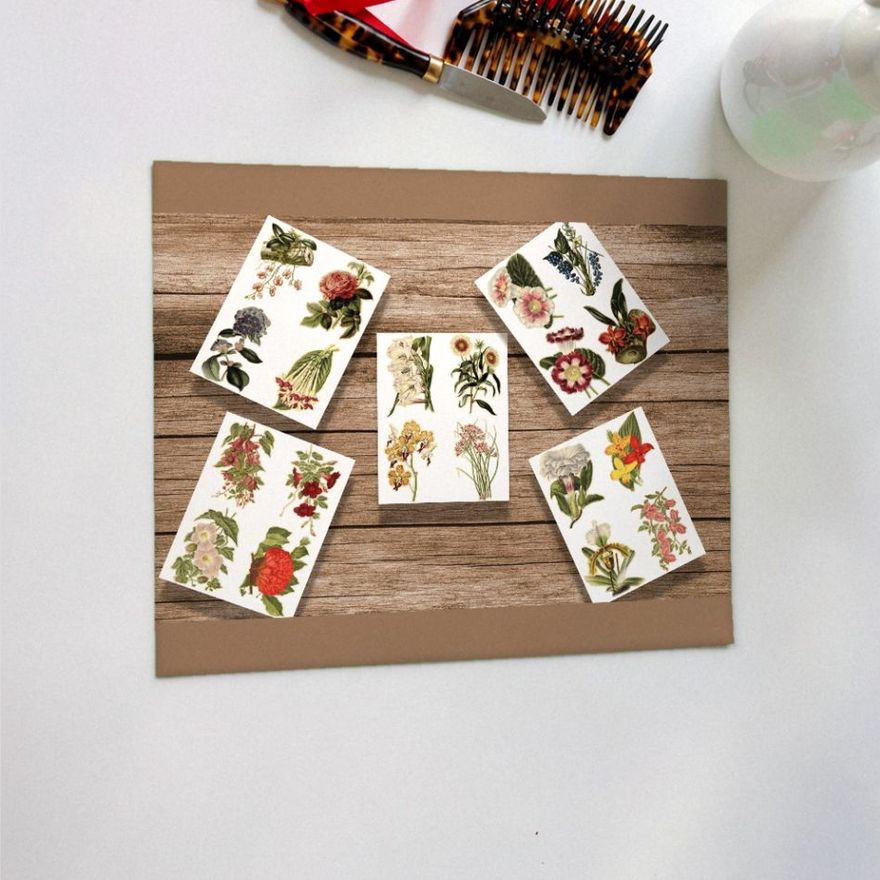
Botanical kits make good first Coptic journals, since flat-opening pages show off full-spread illustrations:

Mega Vintage Botanical Junk Journal Kit
See the listing ↗
Small Vintage Botanical Junk Journal Kit
See the listing ↗
Vintage Botanical Junk Journal Papers
See the listing ↗From the collection Botanical & Nature Ephemera. New Creative Fabrica members get 10 free downloads, and any of these can be one of them.
Which Binding Should You Choose?
| Binding | Sewing | Add or remove pages later | Lies flat | Best for |
|---|---|---|---|---|
| Single pamphlet stitch | Minimal | No | Fairly | First journals, mini books |
| Multiple signatures | Moderate | No | Fairly | Fuller journals with sections |
| Elastic | None | Yes | Fairly | Changing journals, gifts |
| Rings | None | Yes | Yes, with a gap | Bulky or fabric pages |
| Coptic stitch | Most | No | Fully | Art journals, keepsakes |
Whichever binding you choose, fold the paper with the grain parallel to the spine for cleaner folds; the best paper for junk journal printables explains how to check grain direction.
Sew the book before you add heavy collage to the center of each signature, but glue background papers to the sheets before you fold them. That way the stitching goes through flat paper, and the bulk builds up evenly afterward.
A Binding Kit for All Five Methods
Everything in the tool list above fits in a pencil case. Rings and elastic cord are needed only for the ring and elastic bindings.
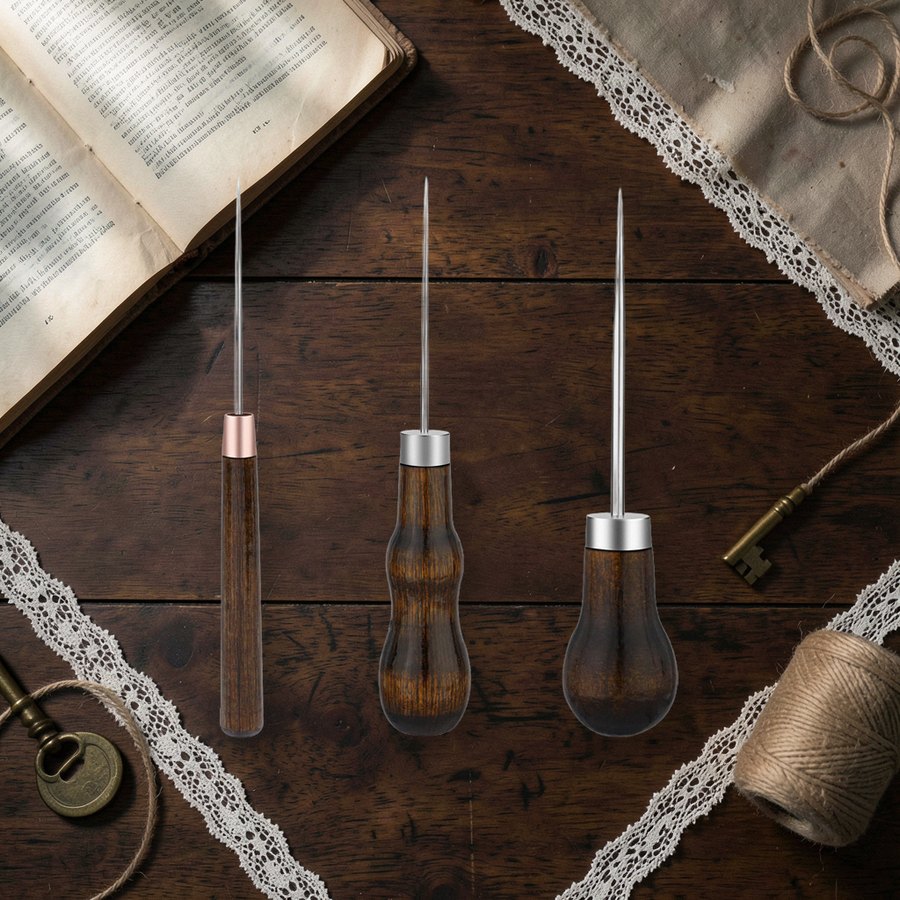 Wooden-handle awls for piercing holesZXIIXZSee it on Amazon
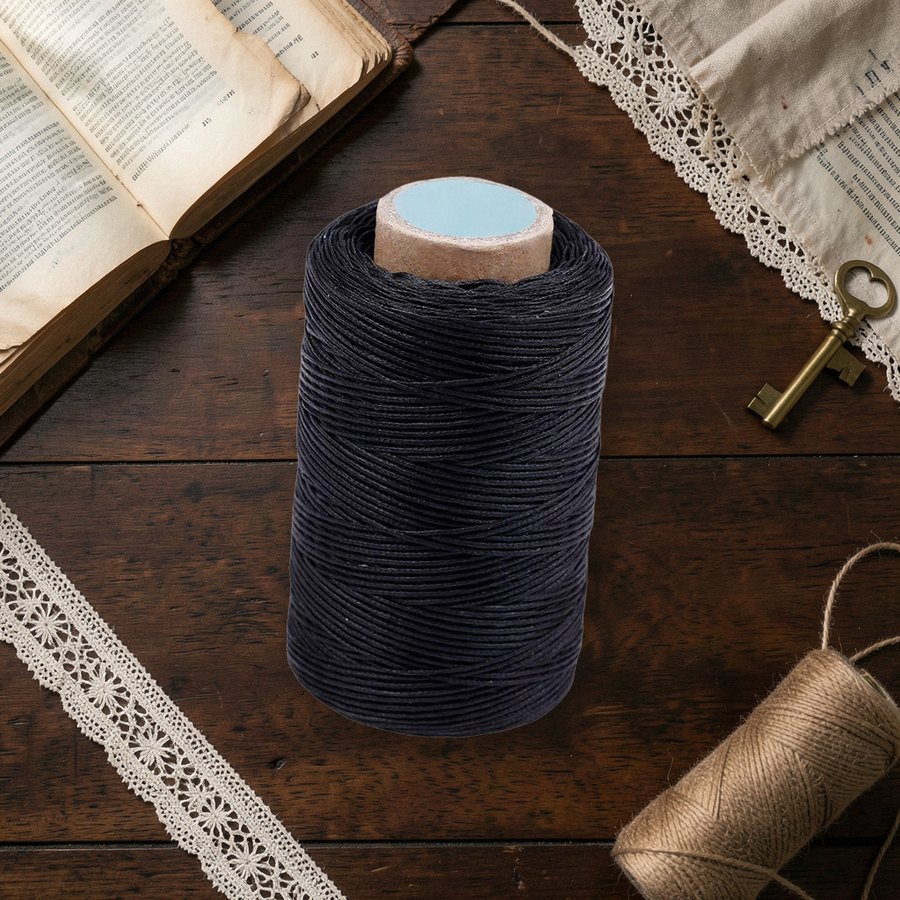 Waxed thread, 0.8 mmBUTUZESee it on Amazon
 Large-eye hand sewing needlesJollMonoSee it on Amazon
 Loose-leaf book rings, assorted sizesMr. PenSee it on Amazon
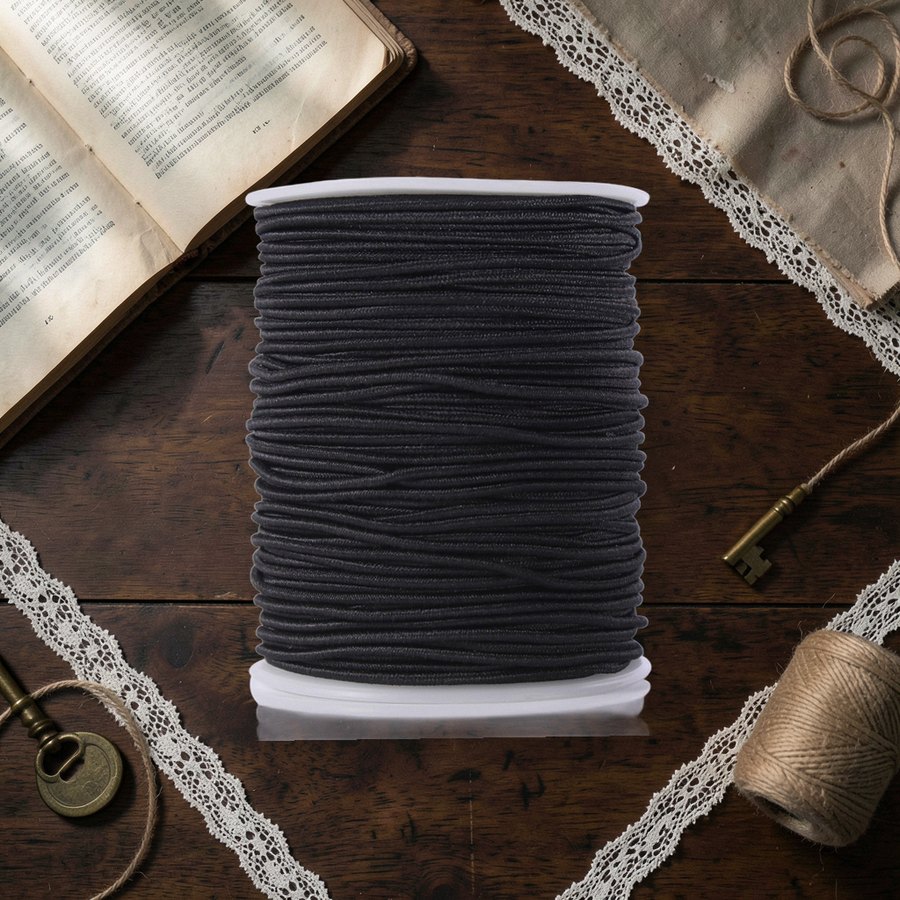 Black elastic cord, 2 mmKONMAYSee it on Amazon
As an Amazon Associate we earn from qualifying purchases.
Your Next Step
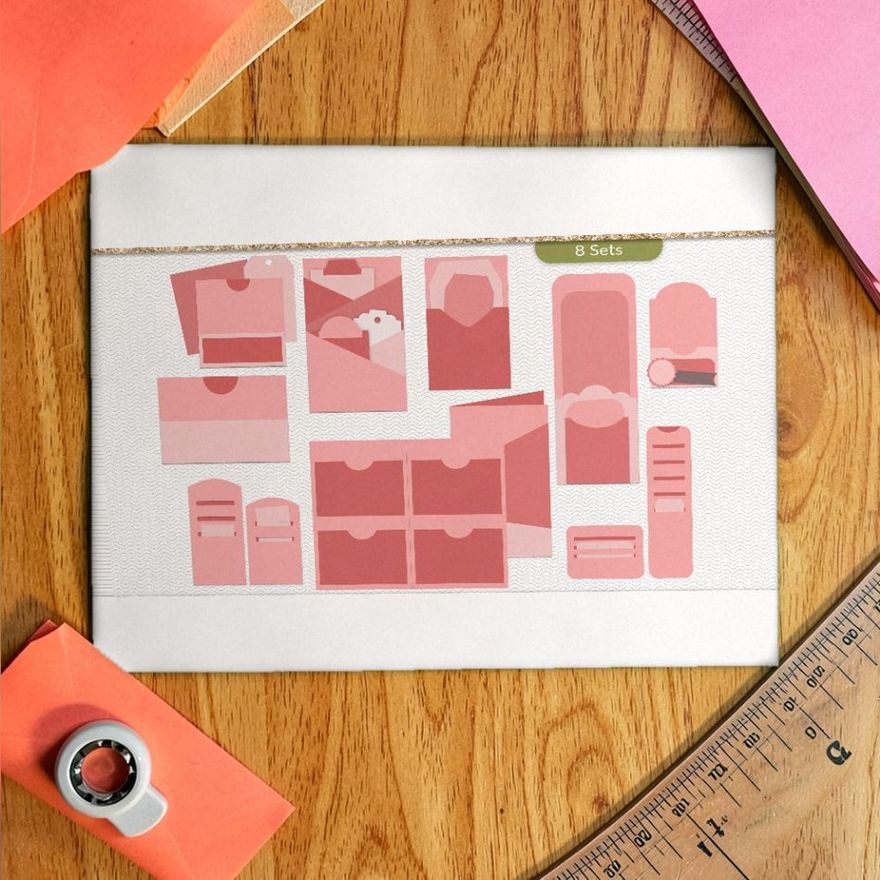
If you have never bound a book, sew one pamphlet-stitch signature tonight with copy paper. Then try three signatures in one cover, and keep the Coptic stitch for your third or fourth journal. Fill the finished book with pockets and tags from pockets, tuck spots and flip-outs, using pages from the junk journal printables collection.
Papers for This Guide
Junk Journal Printables20 hand-picked · open the collection →Botanical & Nature Ephemera17 hand-picked · open the collection →